


















How to Reduce Operational Costs in Your Moving Business with New Technology








Key takeaways of the blog:
- The five most common reasons packers and movers don’t build profiles even after high sales are slow lead response, manual estimates, inefficient routing, paper-based move-day work, and disconnected billing.
- Moving companies using a CRM with automated follow-up close an average of 38% of inbound leads. Whereas companies not using an automated solution close on 22% of leads.
- AI-powered route optimization solutions have helped moving businesses reduce fuel expenses by 10 to 25 percent.
- Virtual surveys return quotes in minutes instead of the one to three days an in-home estimate typically needs.
- Documentation captured on move day protects the business in damage disputes and speeds up invoicing.
- Integrate an automation solution in one process that costs you the most. If the outcomes are worth it, then expand.
- AI supports your estimators, dispatchers, and coordinators. Complex, high value moves still need a human decision.
Even with plenty of opportunities and a rising revenue graph, moving businesses across the world are making thin profits. This is because they operate on very tight margins. Factors such as increasing fuel prices, shortages of skilled labor, vehicle maintenance, packaging materials, storage, administrative work, inefficient routes, and delayed payments are eating into their profits.
The problem is that many of these expenses are unexpected and rarely appear as a single line item on the balance sheet. They accumulate through dozens of small inefficiencies across the moving process and emerge as a concerning element when calculating profit.
A team spending hours manually following up with leads. A dispatcher assigning trucks based on incomplete information. Employees entering the same customer details into multiple systems. A crew traveled farther than necessary because routes were planned manually. An invoice is still unpaid because someone responsible has forgotten to follow up with the client for the payment.
When you calculate these everyday inefficiencies and expenses at the end of the month, they add up to a huge financial loss. Even moves that initially made a profit can end up in a loss or no profit.
Use of technology in the moving businesses
Technology can help moving companies address these problems at their source. AI, automation, cloud applications, GPS tracking, route optimization, digital workflows, CRM systems, and business intelligence can connect different parts of the operation and reduce the amount of repetitive manual work.
This shift is already happening across logistics. According to McKinsey’s 2026 State of Digital Logistics report, 90% of surveyed shippers had already adopted at least one transportation AI use case. The same report also found that around 96% of the moving businesses have already deployed at least one AI or digital use case in their warehousing.
For moving companies, integrating AI-powered automation or adopting new technology does not mean replacing their human resources. It’s about making their people, systems, vehicles, and information more efficient with the same effort and at a lower cost.
This guide explains where moving businesses lose money, which technologies address each problem, what results to expect, and how to decide between buying software and building it.
Where a moving business actually loses money
Many factors cause packers and movers businesses to lose money, and some of the most common reasons are labor costs, rising fuel prices, storage rent, vehicle maintenance, and insurance. Operational inefficiencies can also affect your annual profit margins.
Below are the top 5 reasons that eat into the profit of moving businesses.
- Lead handling: Enquiries arrive by phone, web forms, lead marketplaces, and messaging apps. When they are tracked in a spreadsheet or an inbox, response times vary by whoever is available and follow up depends on memory.
- Estimating: Manual estimates take estimator hours, travel, and fuel. They also introduce variation, because two estimators looking at the same three-bedroom home may quote different crew sizes and truck counts.
- Dispatch and routing: Manual planning leaves empty miles, idle time, and overtime in the schedule. With fuel making up nearly 24% of total trucking operational costs, according to ATRI, small routing inefficiencies add up quickly.
- Move day execution: Paperwork orders, verbal add ons, and undocumented damage create billing gaps and disputed claims.
- Back office: Retyping data between the CRM, dispatch sheet, and accounting software is a slow and error-prone process. One industry guide describes double entry between CRM and accounting as one of the most consistent revenue leaks in moving companies, since every key invoice risks missed line items and late billing.
Each of these areas has a matching technology solution. The sections below take them in the order a customer experiences them.
6 ways technology can reduce operational costs in a moving business
Simply adding new technology into your business will not help you save money. It has to be done strategically.
Before adding new technology, evaluate your business operations and identify the points that are eating out your profit. Once you find the pain point, determine how it is damaging your business:
- Is it repetitive tasks
- Is it time-consuming work
- Something that leads to errors and failures?
Then identify what technology solutions you need to solve it.
Here are some of the most practical areas where technology can help.
Capture and convert leads faster with CRM automation
The first cost in any moving business is the lead you paid for and never converted. Whether the lead came from Google Ads, website, social media accounts, marketplace, or referral, the value of that enquiry drops sharply with every hour of silence.
Research cited by the Harvard Business Review, as summarized in one moving industry analysis, shows that the window immediately after a lead submission is the most critical period for conversion, and prospects who wait a day have often committed to a faster competitor.
A CRM built for moving workflows solves this in three ways:
- Instant first response: Every new enquiry receives a text or email within minutes, with a call task assigned to the right coordinator.
- Structured follow up: A simple sequence, such as a text within five minutes, an email on day one, and a call on day three, captures most no response leads, and software makes it happen every time instead of only when someone remembers.
- Pipeline visibility: Owners see lead source, stage, and close rate by service type and by sales representative.
The financial effect is measurable. DriveSales reports that moving companies using a CRM to automate follow up, track lead stages, and send estimates digitally close an average of 38% of inbound leads, against an industry average of 22% for companies without one.
A separate documented case describes automated follow up sequences that raised a mover’s booking rate from roughly 28% to 38% of qualified leads, generating about $9,600 in additional monthly revenue.
Where custom CRM development helps: Traditional CRM systems for moving businesses have standard follow-up pipelines. But a custom AI-powered CRM system for packers and movers is built around your workflows and connects your business’s different touchpoints. You can apply your own qualification rules or redirect inquiries by branch, service type, or move size.
Automation can then trigger actions such as:
- Instant inquiry acknowledgments
- Salesperson notifications
- Follow-up reminders
- Quote reminders
- Survey scheduling
- Customer status updates
- Lead qualification
- Automated email or SMS communication
Replace site visits with virtual surveys and AI estimating
Estimating is where many moving companies lose bookings before they ever get to negotiate price. Industry commentary notes that the first credible estimate a customer receives captures a disproportionate share of bookings, and manual quotes add variability with every hand calculation.
Traditional in-home surveys create a delay. In home estimates typically take one to three days to schedule and complete, while software driven virtual quotes are returned in minutes, often within the same hour the lead arrives. Estimators also lose time in transit, which is a direct cost in labor, fuel, and vehicle wear.
Modern estimating technology works in three layers:
- Guided inventory capture: The customer or a sales representative moves room by room, and the system builds the inventory.
- AI assisted item recognition: Video or photo surveys identify furniture and boxes, and calculate cubic footage and weight.
- Rules based pricing: The system converts inventory into crew size, truck configuration, labor hours, and distance-based costs using your own rate cards.
The speed difference is significant. One comparison of estimating tools reports that AI tools typically produce estimates in 5 to 15 minutes versus 20 to 45 minutes for form-based tools and create a video record of pre-move condition that helps in post-delivery disputes.
Once a survey is complete, automation can handle the rest of the estimating workflow, such as:
- Instant quote generation and delivery
- Crew size and truck configuration recommendations
- Cubic footage and weight calculations
- Automatic rate card and pricing application
- Video or photo record storage for dispute protection
- Flagging complex or high value jobs for manual review
- Quote follow-up reminders to the customer
- CRM sync so sales reps see the estimate without re-entry
A note on limits. Automation does not replace judgment on every job. Guidance for AI assisted intake stresses that complex jobs need a human estimate, including high value moves, tight timelines, and unusual access situations, which should route to staff quickly. The best setup lets software handle standard residential moves and flags exceptions for an experienced estimator. That protects both your margin and your reputation.

Stop running your moving business on spreadsheets and isolated apps. automate it with technology.
From inquiry to estimate to delivery, technology can deliver automation solutions for packers and movers that save hours, cut costs, and grow with your business.
Cut fuel, overtime, and idle time with route optimization
Route planning and optimization are the most effective ways to reduce fuel consumption and improve profit margins. Every unnecessary mile costs fuel, driver time, and truck wear. It also reduces the number of jobs a fleet completes in a day.
Manual planning has a ceiling. A dispatcher balances crew availability, truck size, access restrictions, delivery windows, and traffic, usually with incomplete information. Software handles those variables in seconds and adjusts when conditions change.
GPS and route optimization software can consider factors such as:
- Pickup and delivery locations
- Traffic conditions
- Distance
- Vehicle availability
- Vehicle capacity
- Driver schedules
- Job duration
- Multiple stops
- Delivery windows
Published results show a consistent range:
- Telematics vendors and fleet case data report fuel cost reductions of 10 to 25 percent after implementing AI route optimization
- Another 2026 comparison notes that most fleets achieve a 15 to 20 percent reduction, and that AI reduces route planning time by 75 to 85 percent compared with manual methods.
- A McKinsey logistics report, as summarized by a 2026 industry article, found that companies deploying AI across supply chain operations see 10 to 15 percent lower fuel costs and roughly 30 percent fewer late shipments. Digital Applied
- At the largest scale, UPS’s ORION routing system is reported to save between $300 and $400 million annually.
A moving fleet is not a parcel fleet, so expect smaller and more variable gains. Jobs are longer, crews are larger, and stop counts are lower. The strongest returns for movers usually come from three places: sequencing multiple local jobs across a day, planning backhauls on long distance runs so trucks do not return empty, and coaching drivers on idling and speed using telematics data.
An FMCSA field study found that integrating telematics with driver feedback and coaching reduced severe unsafe driving events by 60 percent and improved fuel economy by 5.4 percent for sleeper cabs and 9.3 percent for day cabs. Fewer unsafe events also mean lower insurance exposure over time.
Modernize move day operations with a crew mobile app
Move day is where the promises made during sales meet reality. Paperwork orders, phone calls to the office, and handwritten notes cause delays and billing errors.
A crew mobile app replaces those steps. A well designed one should:
- Work offline, since cellular dead zones are common on move day.
- Capture move day additions such as extra packing, long carries, and stair fees, and route them straight to the invoice.
For labor management, this matters even more. The physical nature of the work makes turnover a constant concern, and labor in the moving and material handling sector remains physically demanding and turnover prone, so the fewer manual steps you ask of staff, the more reliably work gets done. Digital scheduling, clear job cards, and automatic shift notifications lower the training burden for new crew members and reduce mistakes during peak season.
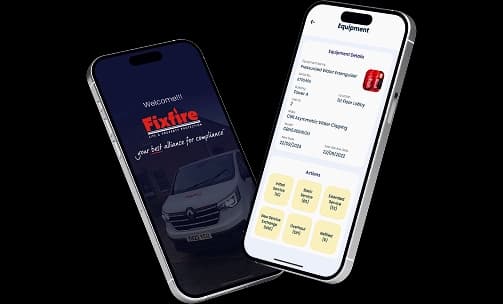
That makes mobile technology particularly useful. A custom mobile application can give drivers and moving crews access to the information they need without repeatedly calling the office. Depending on the workflow, the app could provide:
- Customer and job details
- Pickup and delivery addresses
- Digital inventory lists
- Job checklists
- Navigation
- Photo uploads
- Damage reporting
- Customer signatures
- Job status updates
- Time tracking
- Expense reporting
Reduce damage claims with digital documentation
Unfortunately, if anything is damaged during packing, transport, or unloading, claims can be very expensive. It will not only hurt you financially but may also damage your reputation.
You can solve this by sharing a record of what the item looked like before the move.
Digital inventory, pre-move photos, and signed condition reports turn opinion into evidence. A documentation system built for move day can capture:
- Pre move photos and video of each item’s condition
- Digital inventory lists tied to the customer’s job
- Timestamped condition notes at pickup and delivery
- Customer sign off at both ends of the move
- Damage reports logged on the spot, with photos attached
- A searchable claims history linked to the original job record
One vendor analysis suggests that better inventory tracking and documentation reduces disputed claims by 40 to 60 percent, which for a company handling 200 jobs a month means roughly $2,000 to $5,000 in monthly savings. That figure is vendor reported and depends on your starting point, but it illustrates why documentation is one of the quickest returns on a technology investment.
Connect billing, accounting, and reporting
The last leak is the office. When crew data, invoices, and accounting entries live in separate places, someone retypes them, and every retype risks an error or a delay.
An integrated back office should automatically:
- Generate invoices from completed job data, including approved add ons.
- Sync with your accounting platform through a real connection, not a spreadsheet export.
- Send payment links and reminders.
- Feed a dashboard that tracks metrics such as speed to lead, close rate by service type, on time start percentage, and claims per 100 moves. These are exactly the measures a moving CRM should report, including speed to lead in minutes, close rate by rep, and repeat customer rate.
Workflow automation of this kind also frees office staff from repetitive entry. One of the top-rated moving businesses in the USA admitted that automating scheduling, communication, and quoting saved them about 30-35 hours a week. Whether your figure is higher or lower, automation’s impact is real.
Future-proof your packers and movers business with the most powerful and scalable automation solutions.
Talk to experts to choose the right automation tool to support long-term growth and keep your moving business future-ready.
Technology solutions your moving business can build
As every business is unique, there is no single solution that works for every moving company.
A small local mover may benefit most from CRM automation and digital scheduling. A regional company may need fleet management, mobile applications, and integrated billing. A large multi-location moving business may require a centralized moving management platform with analytics and AI.
Some solutions worth considering include:
| Sr. No | Technology solutions | Operational problem it can address |
| 1 | Moving CRM | It can automate lead management and follow-ups |
| 2 | Quote & estimation system | It can remove the problem of slow quotation preparation |
| 3 | Dispatch management | It can reduce scheduling complexity |
| 4 | Route optimization | It saves your moving business from unnecessary mileage and fuel usage |
| 5 | Fleet management | It reduces poor vehicle utilization |
| 6 | Crew management | It improves scheduling and coordination |
| 7 | Mobile workforce app | It enhances field visibility |
| 8 | Customer portal | It eliminates repetitive status inquiries |
| 9 | Digital document management | It removes unnecessary paperwork and eliminates data duplication |
| 10 | Automated billing | No more delayed invoicing and payment collections |
| 11 | AI chatbot | It handles repetitive customer queries |
| 12 | Business intelligence dashboard | It improves operational visibility |
There is a lot of scope for automation in your moving business, but randomly applying it to any part of your workflow will yield no or fewer results.
So, the important question isn’t “Which technology should we buy?” but “Which process is costing us the most time or money today?”
Based on the answer, technological adoption must begin in your moving business.
How to adopt technology in a moving business – A practical roadmap
One reason moving companies hesitate to modernize is the fear of disrupting day-to-day operations. That concern is understandable.
A moving company cannot simply stop accepting jobs for several months while a new system is developed. A more practical approach is phased implementation.
- Audit your workflow: Closely evaluate your workflow from inquiry to final payment. Note the work that is repeated, delayed, or retyped, and estimate the cost of each.
- Pick one starting point: For most movers, lead response and quoting deliver the fastest return. One vendor report that even for companies with 30 to 50 moves a month, lead response automation alone typically pays for itself. Choose the area where your own data shows the biggest loss.
- Clean your data: You must clean and structure all your data before adopting AI in logistics. Clean and structure all data, such as standardized rate cards, service types, and customer records.
- Pilot, measure, and adjust: Run the new process on one branch, one service type, or one season segment. Compare close rate, response time, cost per move, and claims against your baseline.
- Integrate and scale: Connect the CRM, estimating, dispatching, crew app, and accounting so data flows once and is reused everywhere.
- Train the team: You need to train your team to use automation tools to improve productivity. The best way to do this is to involve them from the early stages of automation.
Timelines vary by scope. One implementation guide suggests a first automation such as lead response and quoting takes two to three weeks from kick-off to live, with wider suites taking longer.
How SHALIGRAM helps moving businesses reduce operational costs
Technology adoption does not mean buying another off-the-shelf software solution for your moving business. It means adopting a digital solution that is designed and developed around your business workflow. It must help reduce operational costs, improve ROI, and enhance customer adoption.
SHALIGRAM is an AI-first software and IT services company that works with packers and movers businesses across the USA, UK, Australia, and Europe. We help moving businesses identify operational bottlenecks and build technology solutions around their actual business processes.
Depending on the business requirements, can build
- Custom moving management software
- CRM and lead automation
- AI-powered customer support
- Moving estimation and quotation systems
- Dispatch and scheduling software
- Route and fleet management integrations
- Mobile applications for moving crews
- Customer portals
- Automated billing and payment workflows
- Business intelligence dashboards
- AI-powered analytics
- API and third-party system integrations
- Cloud-based business applications
The focus is simple: find where time, money, and productivity are being lost, then use technology to address the underlying process.
For a moving business, the right solution may be a small automation connecting two existing systems. For another, it may be a complete custom platform connecting sales, operations, crews, vehicles, customers, and finance.
At SHALIGRAM, we believe technology should fit the business, not the other way around.
FAQs
Results depend on your starting point, but reported ranges include 10 to 25 percent lower fuel costs from route optimization, higher close rates from automated follow up, and fewer disputed claims through digital documentation. Measure your baseline first so you can verify gains.