
















An Automated Applied Epic to Streamline Workflows and Manage End-to-End Policy Lifecycle Efficiently
SHALIGRAM helped Wells Insurance with an automated insurance management system to improve workflow efficiency and strengthen client service strategies.
Client profile
Wells Insurance, an equity member of Assurex Global, is an independent, multi-line brokerage Insurance agency based in North Carolina and operating for more than a century. Businesses rely on Wells Insurance for guidance, clarity, and dependable insurance services. Insurance
Insurance
Insurance
USA
Project overview
Insurance agency workflows are time-consuming as they include several repetitive, error-prone data-entry tasks that can hinder operational efficiency. Although Wells Insurance was built on Applied Epic API, .NET, Azure, and MFA Portal, the company wanted to automate Applied Epic to eliminate manual overhead, and free up their operations team.
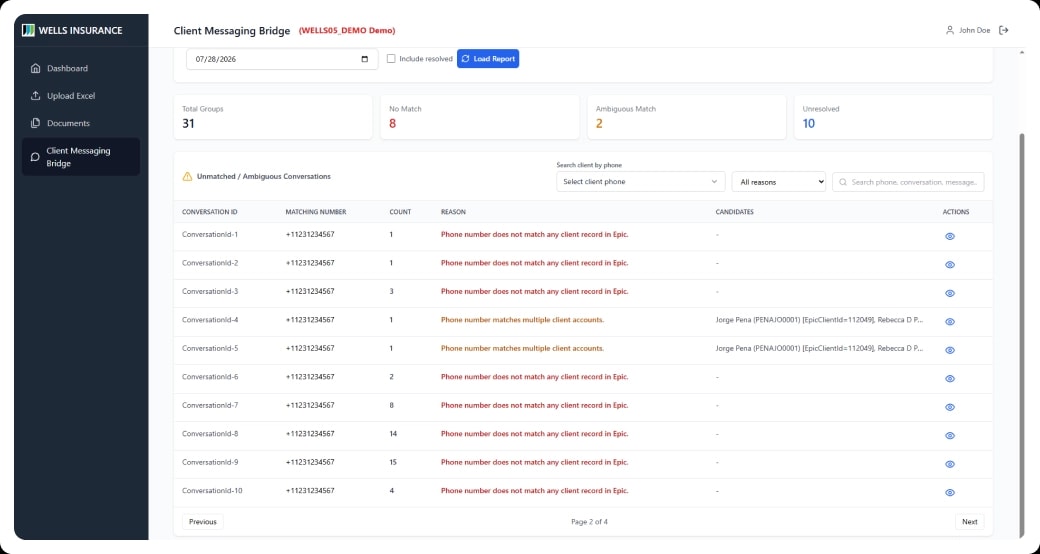
Applied Epic is a cloud-based Insurance agency management system developed by Applied Systems. The company wanted to automate Applied Epic to run email campaigns and track client engagement, automatically read and match statements, extract data from insurance forms, and have an integrated workflow to avoid manual data re-entry. Applied Epic had no native automation facility for bulk category reassignments, and Wells Insurance needed something purpose-built, reliable, and secure.
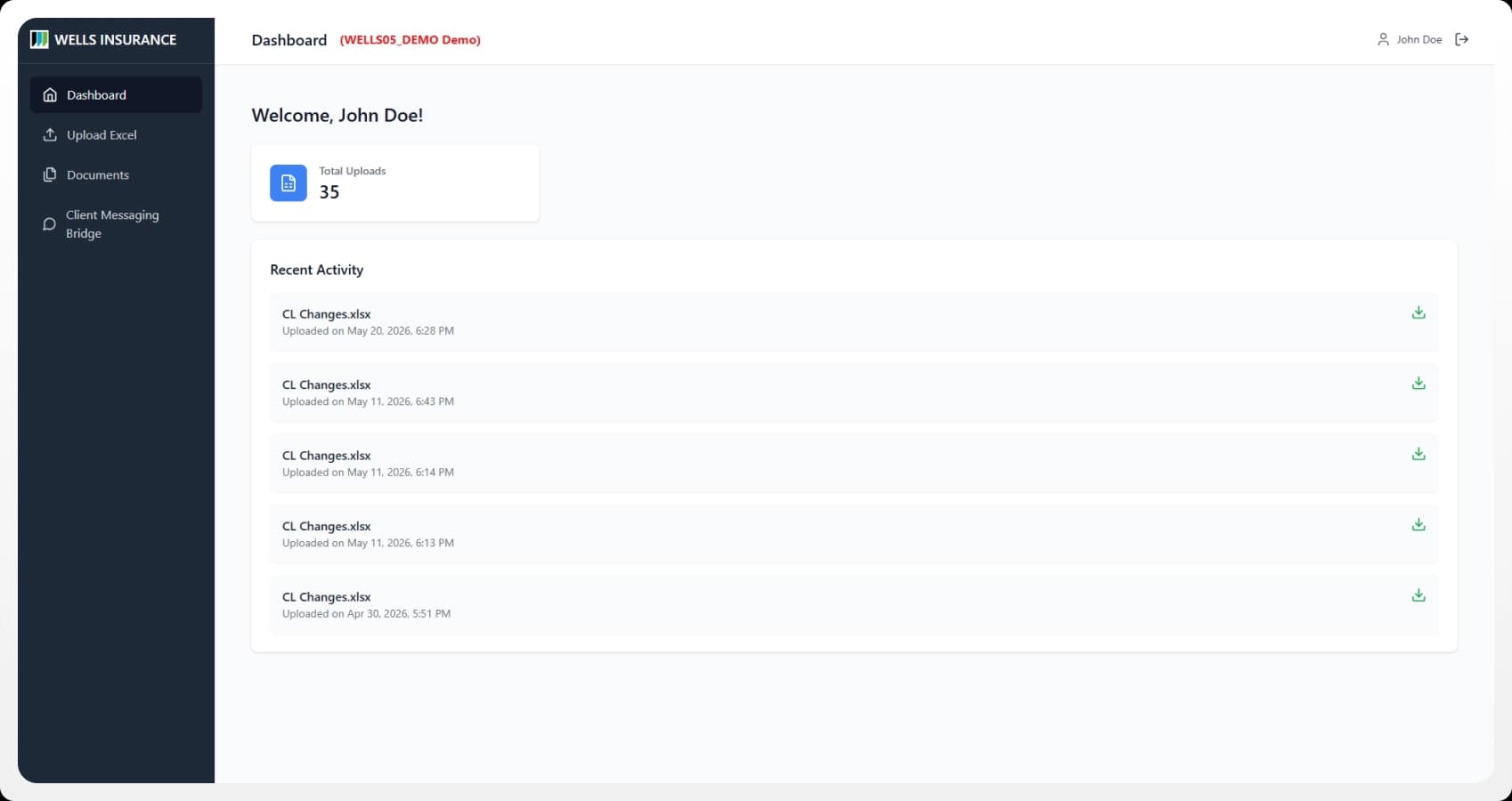
The company chose SHALIGRAM as its development partner to build a secure integration portal connecting directly to Applied Epic via API.
Technical challenges
Although Wells had insurance management software in place, several tasks required extensive data entry, including claims management, policy management, cancellation and reinstatement monitoring, customer support, risk assessment, reconciliation, and more. Every quarter, nearly three to four staff members were assigned to extract customer data, cross-reference category assignments, and manually update thousands of records in Applied Epic. This took days to complete. Also, since the entries were done manually, there were consistent data entry errors.
- Difficulty unlocking greater business value
- Time-consuming manual tasks
- Limited time for client retention and engagement
- Minimal focus on strategic initiatives
- Challenges in making data-driven decisions
- Limited ability to scale efficiently
Our solution
SHALIGRAM designed and implemented a secure integration portal connecting directly to Applied Epic via API. The purpose is to enable automated data exchange, streamline the workflows, and centralize access to information.